Head, Heart and Hands: Coming Home from Terras, Tuscany


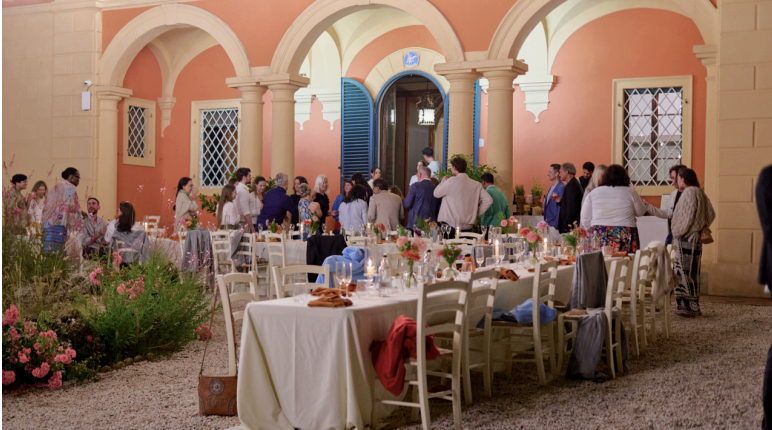
Just got home, tired and sleep-deprived from so much socializing, yet still feeling energized from within and hopeful after Terras.
For some reason, my second time feels even better than the first.
As I reflect on the conversations, laughter, insights, vulnerability, and inspiration of the last days, I find myself organizing my thoughts around the three Hs that Emily Farnworth shared: Head, Heart, and Hands.
Head
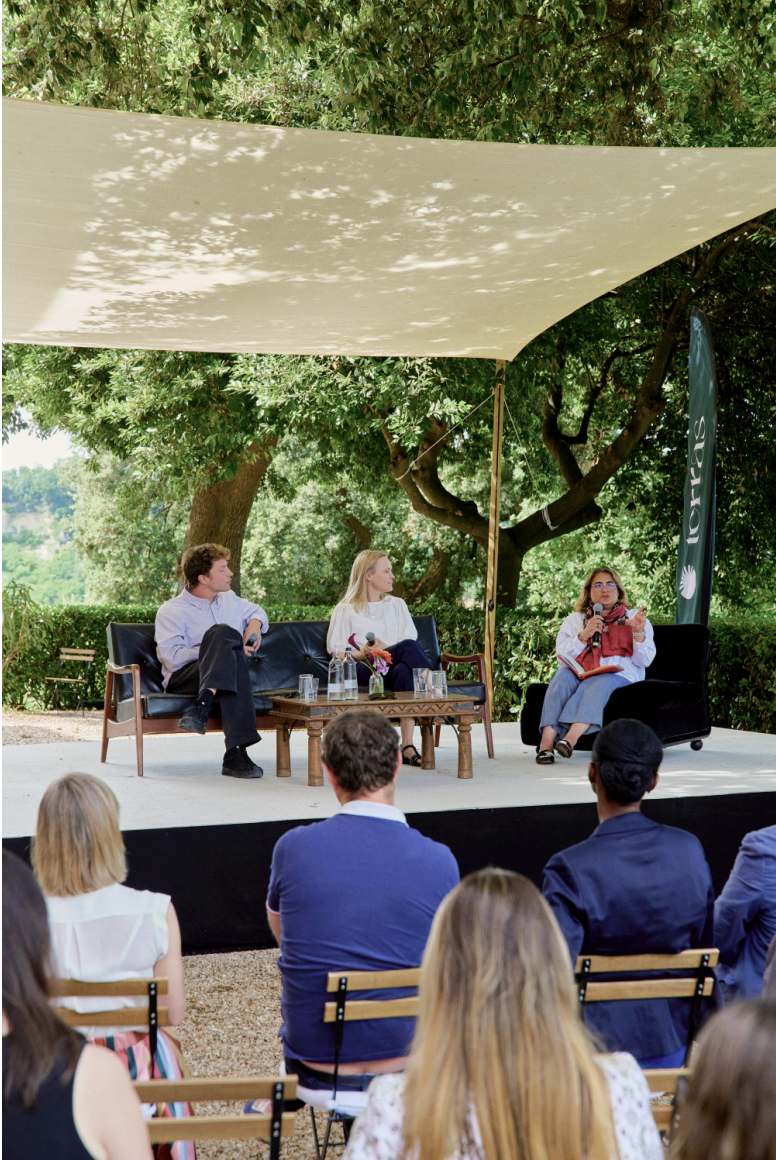
Through the different panels—and especially thanks to the remarkable analysis of the evolution of sustainability professionals and future trends presented by Kurt Harrison—one of the most hopeful realizations I am bringing home from Terras is the feeling that we may already be approaching an inflection point.
Perhaps things will have to get worse before they get better, as is often the case with major transitions. Yet even in the United States, despite political headwinds, investments in renewable energy continue to grow. That alone suggests that economics are increasingly driving decision-making.
It is no longer primarily about moral righteousness—a framing I have never been particularly fond of. Economics are increasingly leading the way. Thanks to years of investment in research and innovation, and partly because a disrupted water cycle is creating greater climate volatility, the economics are increasingly favoring circularity, sustainability, renewable energy, and resilience.
Orders for electric vehicles continue to grow because, for many consumers, driving electric is simply becoming more economical than driving on gasoline. I see this myself when managing our household finances: the savings from our hybrid vehicle are significant.
The economics of resilience are also evolving—from a narrative of cost avoidance to one of value creation. Through lower financing costs, improved asset performance, reater operational reliability, reduced water risks, enhanced supply chain stability, higher land values, and, perhaps most importantly, increased insurability, investments in resilience are increasingly demonstrating tangible value.
And while one could become cynical and argue that this is merely market logic at work, systems thinking suggests something different. Once the right reinforcing feedback loops are established, they begin to accelerate change on their own. If that is the case, we may finally be setting larger systems in motion in the right direction.
This is certainly no reason to reduce our efforts. But perhaps it is worth entertaining the possibility that we have already won an important battle.
Alongside this, sustainability—difficult as this may be for some professionals whose roles are changing or even disappearing—appears to be becoming increasingly embedded within core business functions. It is no longer a corporate social responsibility initiative sitting at the margins; it is becoming part of the operating system of the company.
And perhaps that, in itself, is evidence that the business case has been made. Sustainability is increasingly becoming part of how companies operate, innovate, and compete.
As a guest to the ESG Decoded podcast hosted by fellow Terras participant Emma Gillespie Cox stated, there is something powerful about ambitious constraints. When engineers are challenged to design within environmental boundaries, or when organizations genuinely embrace circular economy principles, they are often pushed toward disruptive innovation. Sustainability is not a charity case. Increasingly, it may determine whether a company thrives in the emerging economy—or disappears.
Another insight reinforced my belief in mission-driven investment planning.
Marisa Drew spoke about the importance of setting a target and articulating a clear vision of where a company, city, or community wants to be. Once a compelling vision is established, people begin to organize around making it a reality.
Having a North Star matters.
It was also encouraging to see actors across sectors rethinking their roles, including the insurance industry. Many are seeking involvement much earlier in decision-making processes, contributing their expertise during investment origination and helping strengthen collective intelligence from the outset. That is precisely where I believe we need to go.
After all, as we concluded during the panel on resilience in a disrupted market, the most interesting question is no longer: “How do we price climate risk?” but rather: “What institutions, financial structures, and governance systems are needed when climate volatility becomes structural?”
Beyond that, it is becoming increasingly clear that the leaders of the future—operating in a world defined by uncertainty and volatility—will be systems thinkers. They will be people capable of embracing complexity, understanding the interdependence between water, energy, food, insurance, financial, and community systems, and building bridges across sectors and stakeholder groups.
Their role will increasingly be to align incentives across actors and scales, working at watershed and landscape levels rather than focusing solely on asset-level optimization.
Heart
What moved me most was not only what I learned, but who I learned it with.
The level of people at Terras is incredible. Many hold top leadership positions in corporations that, to a large degree, help shape our world.
And yet, most remain remarkably humble and grounded in purpose, perhaps because they understand the immensity of the challenges ahead.
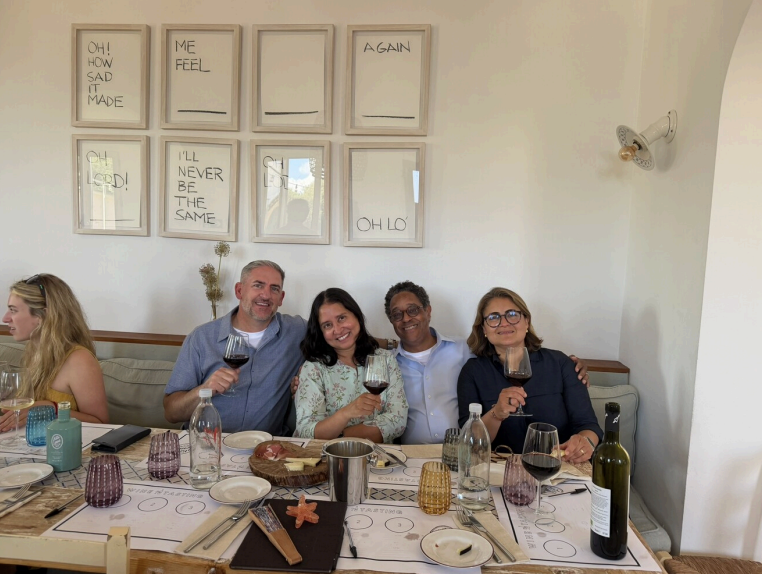
What surprised me most was the genuine spirit of community that seems to be emerging.
Many of us commented on Marvin Rottenberg's remarkable gift for spotting talent, but perhaps even more importantly, for recognizing a rare combination of confidence and humility in people. Looking around the room, I could see what they meant.
I found myself deeply grateful for the quality of the conversations—not only about sustainability, systems change, and the future, but about life itself.
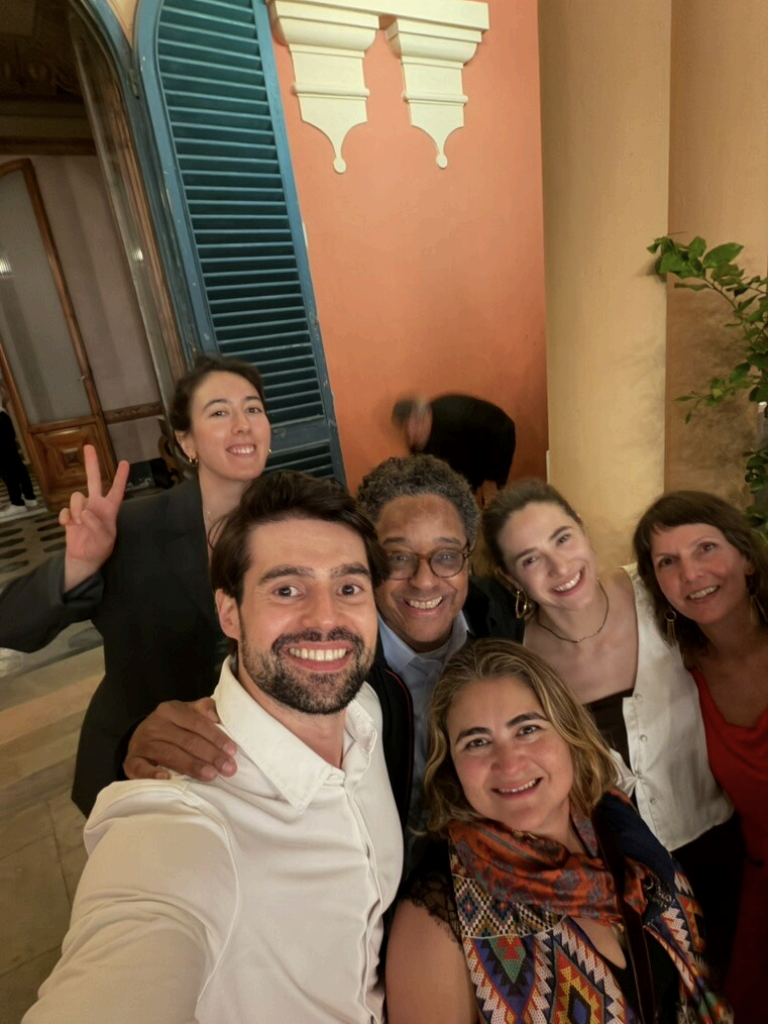
It was wonderful to be inspired and challenged intellectually. But it was equally meaningful to laugh, take “natural looking” pictures, and share moments of profound vulnerability about our journeys, doubts, losses, hopes, and dreams.

And yes, dancing La Samaria while singing “Yo Soy de Aquí,” expressing with all my heart how proud I am to be Central American and therefore “Caribbean”, alongside the incredible dancing king Philippe Vedrenne, was absolutely priceless.

Those moments matter too.
Perhaps more than we sometimes admit. What I personally enjoy about dancing is that dance is a universal language, one where hierarchies and titles are set aside and you can simply experience people’s energy.
Hands
And then comes the question: what do we do with all of this?
For me, the answer starts back at the office.
It starts Monday by inviting pioneers from the public and private sectors to join our NetworkNature Mission-Driven Investment Planning bootcamps in Bari and Dortmund, hile continuously curating and nurturing brave spaces where people can rethink and reimagine the future together, backcast from that future, design the infrastructure systems needed to achieve it, and then engineer pathways to implement, fund, and finance them.
Because ultimately, that is what this transition requires.
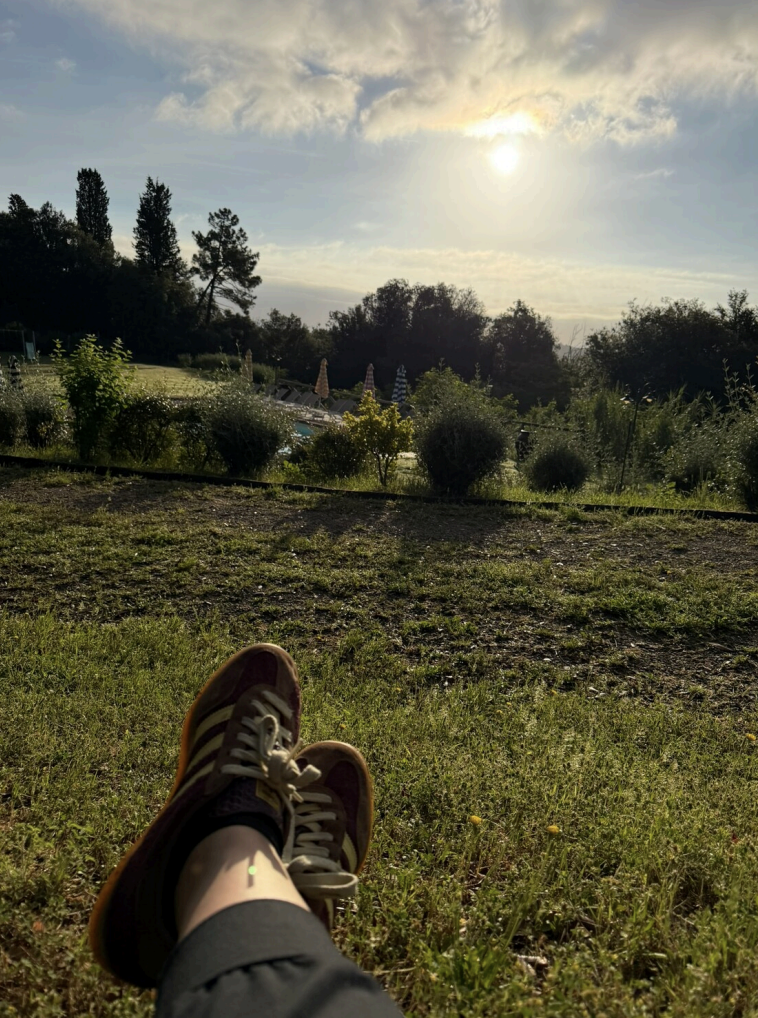
As Marisa said, you set a very ambitious goal, take a leap of faith, and then get to work.
You commit to a future that does not yet exist and begin building it anyway.
Maybe that is the invitation I am bringing home from Terras.
To spend less time focusing on what we fear and more time focusing on what we want to create.
To be bold enough to articulate ambitious visions.
To trust that collective intelligence can emerge when we gather with purpose.
And to remember that transformation begins when we decide to move— from ideas in our heads, to conviction in our hearts, and finally into action through our hands.

It is about time. For us and for the seven generations to come, it is really time to put more attention on what we want to see and to create together.