Between North and South: Reflections on Belonging, Water, and Discernment


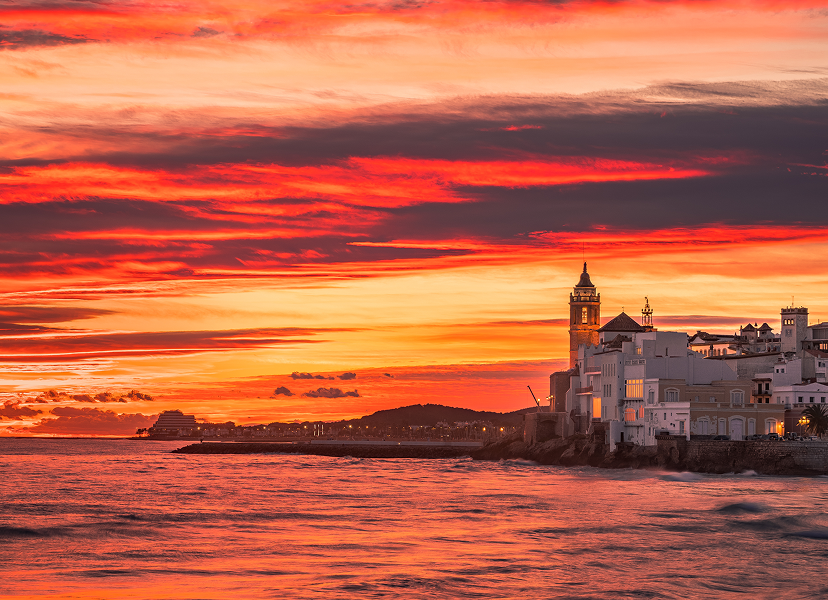
I just arrived in Sitges, a coastal town near Barcelona, where I will most probably be spending more time over the coming years. A bit of the Spanish-speaking home I can’t have in my own country.
This week, I’ve been thinking about what I want to focus on this year— and about my own mission in the chaotic world and time that 2026 promises to be. For some reason, recent experiences and what I read in the news keep bringing me back to the North–South relationship, especially between the Americas and Europe. Not as an abstract debate, but as something deeply personal—and increasingly central to my work.
Even more so today, with the realization that a historica012l milestone has been reached. On January 17, in Paraguay, after nearly 26 years of negotiation, the European Union and Latin America’s Mercosur bloc signed a landmark free trade agreement—against a backdrop of global instability. This unfolds in a context marked by disruptive U.S. foreign policy moves in the region, including the sudden removal of a South American authoritarian leader from Venezuela—news that hit close to home, because I am from Nicaragua. I must confess that I am still forming my own opinion, while recognizing that it is the voices of Venezuelans living this reality firsthand that matter most.
I grew up in Nicaragua reading Cuban poets and studying from Russian- inspired books at school—my sister reading Sputnik, the Russian magazine for teenagers—while at the same time longing for freedom and democracy. Something I was lucky enough to experience briefly in the 1990s, starting when I was 12 and lasting into the early 2000s, a few years after I left to study in Delft.
Unfortunately, this young democracy was short-lived. What my mentors —and my boss at the time, then Minister of Education and head of the social cabinet—had warned me about before I left to study in the Netherlands did end up happening. Ortega returned to power in 2005, and the rest is history.
The silver lining was the upbringing this period gave me: a resilient mindset, a strong will, and an almost limitless sense of hope. I’m reminded of how unique that upbringing was when I find myself laughing nonstop watching Marcello Hernandez ’s recent Netflix show American Boy—a small glimpse into a childhood that, in different ways, shaped both of us.
As I said, all these recent experiences and world news keep bringing me back to the North–South relationship between the Americas and Europe. And I’ve been thinking more deeply in my way here. There is something about taking off and seeing the world from the clouds that helps me with taking distance, zooming out, and reflecting more deeply.
And what am I finding out? That I know I want to write. I’m just not fully sure yet about the focus I want to choose. While scientific and policy work feels urgent and necessary—and I have done it for decades—I also find myself drawn to deeper reflections on life, meaning, and purpose- driven leadership.
I also feel increasingly conflicted about how to think about colonization. I reject the hierarchies, dependencies, and supremacies it created— dynamics that still place me, as a Latin American, either at the service of historically dominant Western structures, or misunderstood within the Global South contexts I work in. And yet, looking here at the name Santa María—one of the ships that crossed the Atlantic—I also know that I, Mónica Alejandra de Jesús Altamirano, would not exist without this history.
I am a product of what we call in Latin America mestizaje—formed across different cultural contexts, including being raised by a Dutch stepfather. And my children even more so.
So maybe my task—personal and professional—is to learn how to navigate that discomfort. To bridge worlds. To help chart what a new, regenerative relationship between North and South could look like—one that allows all of us, without exception, to thrive, together with nature.
This is why the EU–Americas moment matters to me. I’m grateful for the analysis being done by colleagues— Gonzalo Meschengieser (you can see his article here) and the increasingly inquisitive discussions we can have as LAC community working on water and climate. What emerges clearly is that water and freshwater ecosystems must be central—not peripheral—to this new phase of cooperation if our economies are to become truly regenerative and resilient to a changing climate.
The investments ahead—on adaptation, resilience, and new value- creation models—are steep. They will require different ways of thinking about trade, finance, and shared responsibility.
Having worked on the shaping of a water foresight event about the financing of the EU water resilience with the EIB, and now contributing to a white paper while planning upcoming exchanges with fellow Latin Americans, I feel both hopeful and humbled. There is still so much to research and understand—particularly about the role of trade in water resilience.
The older I get—now having lived half my life in the Netherlands—the more I learn to surrender. The more I see that there is no black and white, only many shades of grey and grace. As the Jesuits taught me. As we say in Spanish: God writes straight with crooked lines.
And yes, I even find myself wondering: what if today’s disruptions and authorative leaders are also forcing us to rethink old supremacies, to imagine a more genuine multilateralism, and to ask harder questions about leadership, equity, and what really moves us forward?
I’m trying to embrace the discomfort of not knowing. Maybe this will be a year of building—of expanding impact through my work. Or maybe another year of discerning. Or perhaps both.
Because clarity—real clarity—is often the first step toward doing something worthwhile. As Jean-Philippe Courtois wrote in his January 15 blog, “Preparing Your Mind to Shape the Future”: “Every season of my life that truly mattered started the same way: not with a strategy, but with clarity”. You can read his blog here.
The silver lining of times like these—full of stress, shocks, and uncertainty—is that we are pushed to dig deeper, to discern what truly matters, and to become more present to those around us as we work together toward an envisioned future.