
Climate Finance Architecture Review: Leveraging Private Sector Investments in Adaptation


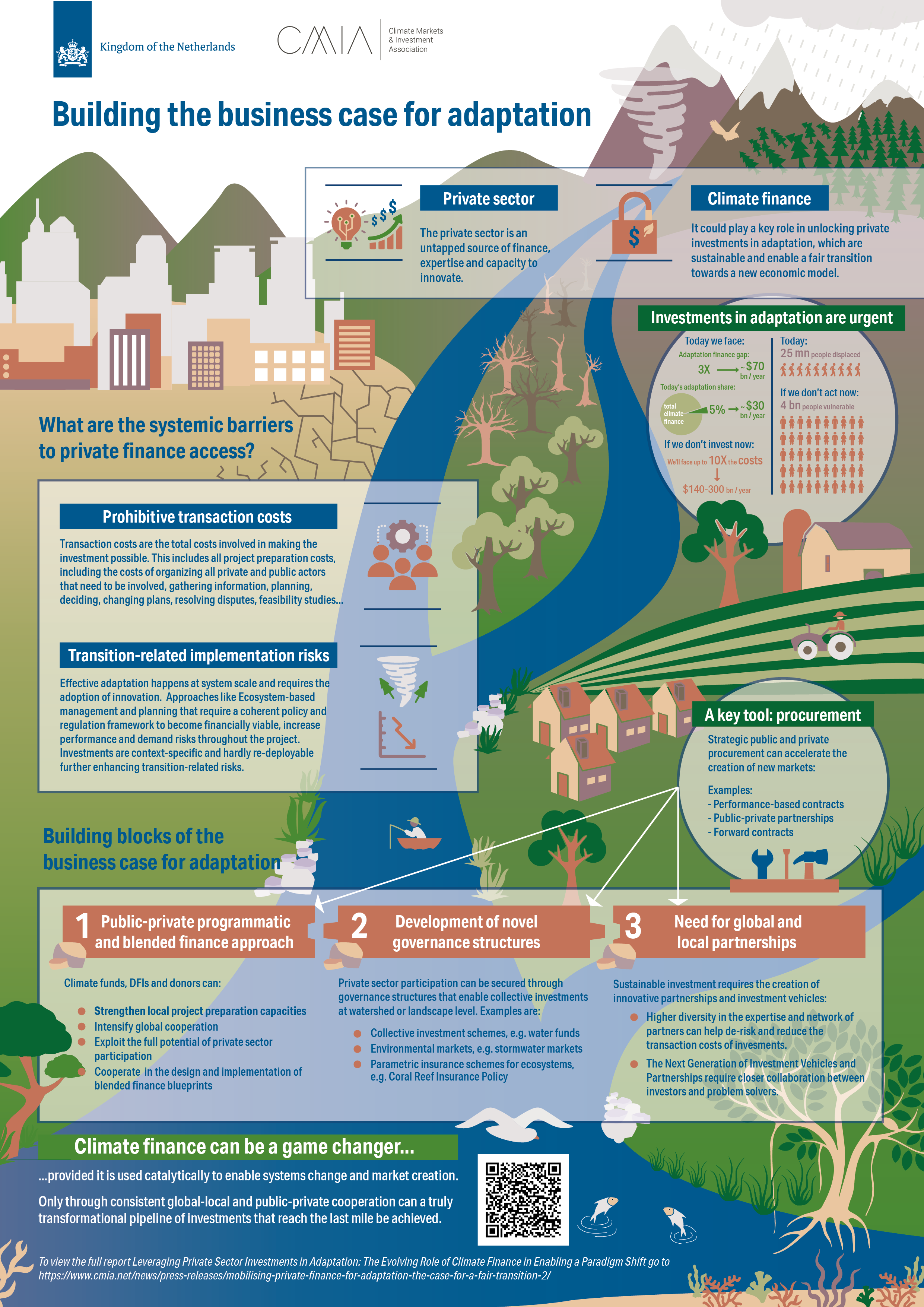
Private sector engagement in climate adaptation is essential — not only to close the implementation gaps in National Adaptation Plans (NAPs) and Nationally Determined Contributions (NDCs), but to secure the long-term financial sustainability of adaptation investments. This study takes a decade-long, multi-method look at international climate finance, analyzing the project portfolios and evolution of three multilateral climate funds between 2010 and 2020 — the Pilot Program for Climate Resilience (PPCR), the Adaptation Fund, and the Green Climate Fund — alongside field research with the Green Climate Fund's Private Sector Facility and interviews with climate finance experts. The result is a cross-national view of how climate finance can be structured to unlock private investment in adaptation, despite the diversity of challenges involved in making adaptation projects investable.
Drawing on three pioneering private-sector adaptation projects from multilateral climate funds and four from multilateral development banks across Africa, Latin America, and Asia, together with nine public-private flood protection financing examples from the UK, the Netherlands, Australia, and Costa Rica, the paper offers insight into innovative financial structures, novel governance arrangements, and operational recommendations for donors, climate funds, the private sector, and governments. Combining systems thinking, New Institutional Economics, and case study research, it finds that most private-sector efforts to date have relied on financial intermediaries to lower the cost of capital — while systemic barriers like high transaction costs and the transition risks of unproven solutions, such as Nature-based Solutions, remain largely unaddressed by current programmatic approaches.
https://www.cmia.net/news/press-releases/mobilising-private-finance-for-adaptation-the-case-for-a-fair-transition-2/
Related Talk