Closing the Implementation Gap in Water Security: Financing Water Security in Latin America and the Caribbean


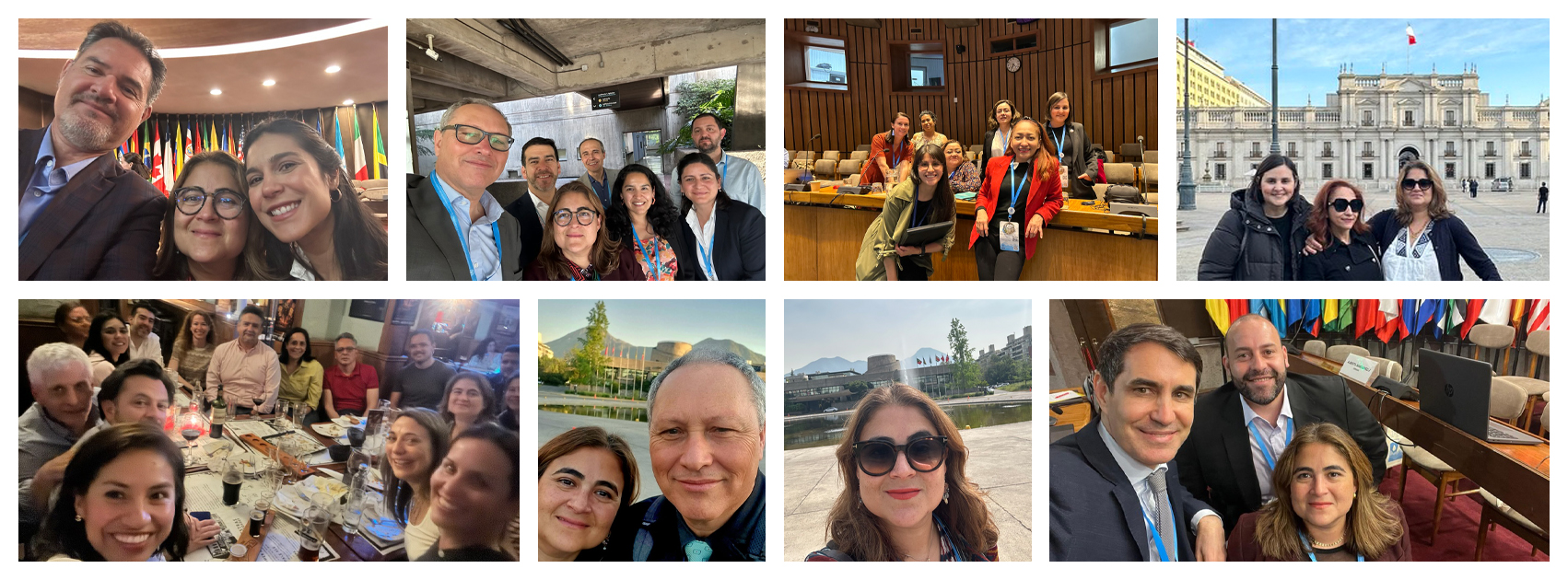
I have had a deeply rewarding two years working on advancing water security and collective action supporting the United Nations Economic Commission for Latin America and the Caribbean (ECLAC) Division of Natural Resources. As I draw this chapter to a close, I am reflecting on this time, providing strategic advice to the division on finance and partnerships. I am both grateful and proud of what we achieved.
Over this period, I contributed to advancing approaches to water security in Latin America and the Caribbean, exploring innovative financing pathways and a new generation of Public-Private-Philanthropy-People partnerships in the region.
🌎 I am especially grateful for the opportunity to apply my Financing Framework for Water Security (Marco de Financiamiento para la Seguridad Hídrica), developed in prior research and practice, to theregional context of Latin America and the Caribbean, and from this perspective, to contribute to the development of an analysis of innovative financing options to advance water security in the region.
🔎 A number of highlights from this period include:
📄 Publication (Spanish):
Marco de financiamiento para la seguridad hídrica en América Latina y el Caribe
https://www.cepal.org/es/publicaciones/85987-marco-financiamiento-la-seguridad-hidrica-america-latina-caribe
Special Session – LAC Regional Water Week 2025:
‘Closing the Implementation and Financing Gap for Water Security in Latin America and the Caribbean’
We had three roundtables focused on:
▪️ Impact Investment and Results-Based Financing Mechanisms: Convergence Global Blended Finance Forum | Heiner W.Skaliks, Aguas Andinas Veolia | Antonela Laino, Water.org | Renato Moura, WaterEquity | Maria Teresa Medina , WASTE | Carolina Latorre Aravena, NDC Partnership | Daniel Vera González.
▪️ Innovative Partnerships for Collective Action: We Are Water Foundation | Carlos Garriga, Bonneville Environmental Foundation (BEF) | Todd Reeve, Claudio Teloni | FUNDAPAZ, Kerly La Rosa | Aquafondo, Newmont ALAC | Violeta Vigo.
▪️ Rethinking Investment Planning and Origination: CAF -banco de desarrollo de América Latina y el Caribe- | Franz Rojas, European Investment Bank (EIB) | Stephen Hart , Ministerio de Obras Públicas| Carlos Estévez Valencia, Global Water Partnership | Fabiola Tabora Merlo, Angela Maria Penagos Concha | United Nations Economic Commission for Latin America and the Caribbean (ECLAC), Climate High-Level Champions| Marcia Toledo Sotillo.
These conversations contributed to inspire countries in the LAC region to rethink their strategies and explore new avenues for engaging the private sector as part of the solution, unlocking collective action and investments at the pace and scale needed to achieve water security and, with it, sustainable, equitable and resilient economic development.
📝 Briefing note (EN):
https://www.cepal.org/en/notes/session-closing-implementation-and-financing-gap-water-security-latin-america-and-caribbean
📝 En español:
https://www.cepal.org/es/notas/sesion-cerrando-la-brecha-implementacion-financiamiento-la-seguridad-hidrica-america-latina
🎥 Recording of the first roundtable (including opening keynote byMr. Alva Browne, Permanent Secretary within Government of Grenada Ministry of Infrastructure, Public Utilities, Civil Aviation and Transportation):
🤝 I will be forever grateful to all my partners in this process of rethinking and reimagining our investment origination and project preparation processes to unlock collective intelligence and investments at scale.
Permanent Secretary Alva Browne Calls For Urgent Action To Close Water Security Gap Across Caribbean At Regional Water Week 2025
💡 My work at CEPAL helped reinforce a personal conviction: addressing water security challenges requires not only technical solutions, but stronger alignment between public priorities, private capital and long-term, cross-sectoral investment strategies.
🚀 Following a period of reflection, I am now investing more deeply in the development of my own consulting practice on regenerative financeand mission-driven investment planning, my team and a set of strategic projects. This includes the implementation of modular training onmission-driven investment planning developed as a consortium member of the NetworkNature EU European Commission -funded platform, and its application across different regional contexts - starting this year with Bari (Italy) and Dortmund (Germany).
From Planning to Action: Building a Pipeline of Bankable NbS Projects through Bootcamps
🌍 I will continue working on water security and adaptation across geographies - collaborating with partners in Europe and Latin America through private sector engagements, board roles in industry, and nonprofit initiatives, including in the Amazon region - while further advancing approaches to regenerative infrastructure aligned with planetary boundaries. I also look forward to expanding this work globally. Thank you to those who have been part of this journey - I look forward to hat comes next.
The work described above is grounded in the development and application of the Financing Framework for Water Security, which I briefly outline below.
🧩 The Financing Framework for Water Security (FFWS or MFSH in Spanish) is a framework and collaborative project preparation approach which aims to set in motion a multisectoral and transdisciplinary process, bridging strategic adaptive planning and investment planning phases. It is largely based on the theories of my PhD thesis, combining Institutional Economics and Systems Thinking, and was inspired by the gap and disconnection I observed between strategic planning for water security and the investments taking place on the ground that respond to the needs of people.
It has been applied across multiple regional contexts to address a range of investments challenges, including in Europe (Spain, the Netherlands, Romania, Italy) to accelerate the implementation of NbS for water security and climate adaptation; in Latin America (Mexico, Peru, Chile and Agentina through collaborations with the Inter-American Development Bank , CAF -banco de desarrollo de América Latina y el Caribe- and Wetlands International; and, more recently, in El Salvador through United Nations Economic Commission for Latin America and the Caribbean (ECLAC) ); and in Southeast Asia (including the Philippines and Semarang through the Netherlands Funded Water as Leverage programme).
Achieving water security: strategic management and culture of innovation in Argentina
Its initial application and tailoring for Nature-based Solutions (NbS) and hybrid green-grey infrastructure for water security was supported by the Horizon-funded Project NAIAD in Europe and resulted in step-by-step project preparation guidelines presented in the Handbook forImplementation of NbS. More broadly, the FFWS is increasingly informing engagement with development banks, impact investors within the climate-nature-water nexus and public financial institutions. The FFWS has been featured in the Global Environment Facility IW:LEARN Tools Compendium, available here.
🎓 For this methodological development, I am especially grateful to Prof. Claude Ménard , Professor of Economics at Université de Paris (Panthéon-Sorbonne) and external examiner for my PhD thesis, from whom I learned the crucial role of institutions and the importance of considering transaction costs in the design of effective implementation arrangements. Through his paper ‘A New Institutional Perspective on Environmental Issues’ (2011), he helped me identify a critical research gap in the management of environmental challenges.
I am also deeply grateful for the early support and belief in this idea—when it was still taking shape—from Henk Ovink, Niels Vlaanderen, and Jan van Schoonhoven. I am equally grateful to Prof. Eelco van Beek, my mentor at Deltares , who introduced me to the world of Integrated Water Resources Management and river basin planning, and who has been a strong and consistent supporter of these advances over time.
I would also not have been able to bring that first handbook to publication without the invaluable support of Begoña Arellano Jaimerena and the exceptional Closing the Implementation Gap team at Deltares—a group of female experts and thought leaders advancing water security.
Empowering local people to engineer their own futures: a new infrastructure planning approach
I am also forever grateful to Cara Santos Pianesi for the invitation to write a blog for the The World Bank Group where I was able to give form, for the first time, to this vision of a new approach to infrastructure investment planning based on regenerative design principles.
This is for me a powerful reminder of the importance of making ideas explicit—and of not underestimating what can emerge from a vision once it is shared. Or, as Bad Bunny would say, nunca dejes de creer en ti.