Half a life sailing away from home: Love, struggles, hope and the journey toward belonging


This month marks 23 years since I came to live in the Netherlands—half of my life. It has been a special week, not least because going out three times to Sail Amsterdam brought together so many threads of my world.
I arrived here 23 years ago to become a student again, after serving as a technical assistant to the Minister of Education in Nicaragua. My journey began in Delft, where I joined a program at the Delft University of Technology designed for engineers who wanted to think beyond technical systems and engage with the bigger questions of infrastructure and public policy—hoping to return home and contribute to deepening our nascent democracy.
But life took turns I did not anticipate. I fell in love, and my path shifted. I stayed on to pursue a PhD on public–private partnerships in the road sector. That original dream of returning or of joining a development bank never materialised. Living in the Netherlands—building a family, taking root here—reshaped my priorities. And though I hold a PhD from one of the country’s top universities, and believed I knew the culture since I was raised by a Dutchman, the reality of being ‘different’—whether as a woman, a foreigner, or from another discipline—has not always been easy.
Still, as the years passed, I learned to follow my heart. My mission evolved into something both simpler and larger: to seek ways of making development more equal, of creating a world where all can thrive. This calling carried me across different fields—environment, infrastructure, water, adaptation—each one shaping me in new ways.
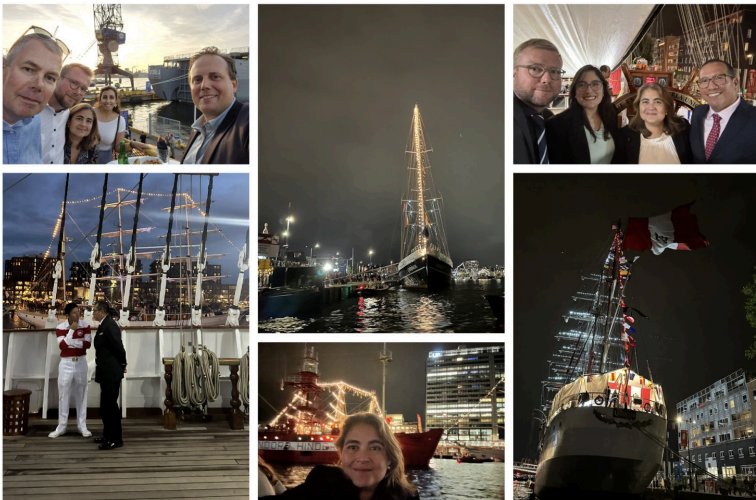
This week brought that home to me in a special way. At SAIL Sociëteit Amsterdam , I felt my professional and personal worlds come together. My husband, who works in the shipbuilding industry, introduced me to that world. And on Friday, through the invitation of the Peruvian Embassy, I joined the commemoration of 200 years of bilateral relations between Peru and the Netherlands. Peru—a country that for many years also felt like home to me—where I first deepened my work on valuing water.
In moments like these, I realise how lucky I am, and a deep sense of gratitude overwhelms me. Despite the limitations and extra challenges I have faced in this country for being different, I can now say, at 46, that I am Nicaraguan at heart, but also Dutch.
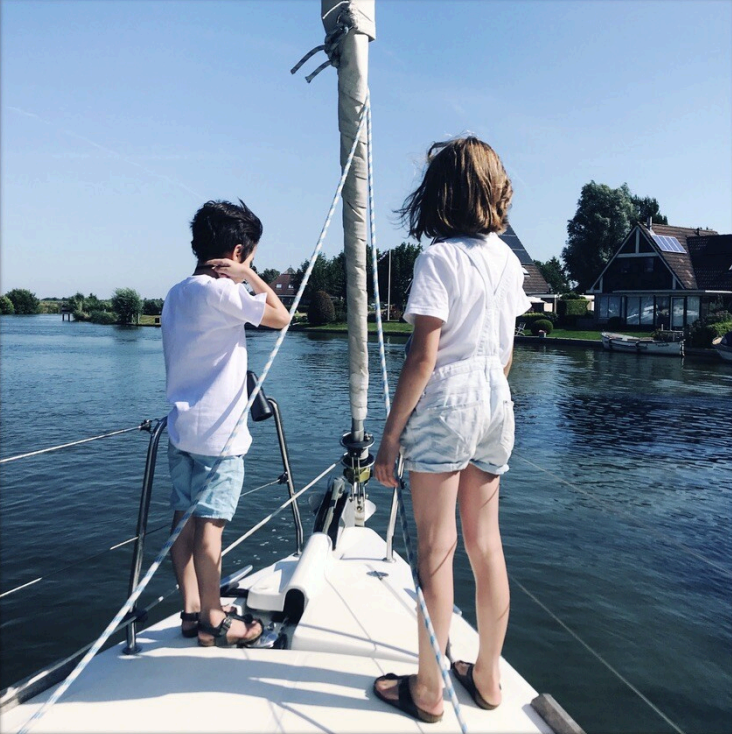
One of the things I love most about the Netherlands is sailing. My husband comes from the north, and one of our very first outings together was a sailing weekend with the European Students’ Association. Sailing carries its own wisdom: you set a mission, a direction, a North Star. You know there will be strong winds against you, but you cannot let
them paralyze you. You simply adjust your sails and trust the wind. You follow your intuition, and try to believe has hard as possible, that you one day -sooner or later- will arrive to where you were meant to be.
That is, in many ways, how I see my own path—what I would call being a policy entrepreneur. Having the freedom to follow the directions where I can create the most impact. It has never been about money, nor about titles or positions. At the end of the day, what matters most is the life that flows through connections—the friendships, partnerships, and moments of solidarity that give meaning to the journey. And within these connections, in their diversity, lie the transformative insights that change not only our own lives but also the world at large.
And this is what I love about the regeneration approach: it reminds us that we cannot address the climate crisis without mending what has been broken. It is about weaving back the strands that have separated humans from one another and humans from nature.
The root cause of global warming is a massive disconnection: between each other, between people and nature, and even within nature itself—fragmentation, pollution, and degradation caused by humans. Regenerating and reversing the climate crisis is really about reconnecting those broken strands. That is what real solutions are, as opposed to stand-alone techniques and technologies trying to “fix” the problem. Paul Hawken
While I have not been able to do as much as I once dreamed for my own country, Nicaragua, I look back and I am grateful that my homeland has become Latin America and the Global South at large. And the fire within me has only grown—to find new ways and investment planning approaches that bridge global agendas with local needs, to prevent countries from slipping back, and to help them advance toward truly regenerative models of economic development.
As I look back on these 23 years, I see not only the struggles but also the grace that accompanied them. In my most difficult seasons, there were always people—angels, truly—who stood beside me, helping me see light again. Each time I surrendered, asking for God’s love and joy to surround me, those angels appeared. For them, I am profoundly grateful. Out of those times came lasting friendships, partnerships, allyships. Gracias queridos amigos y socios!

And now I look forward to Stockholm Water Week next week, to the LAC Regional Water Dialogues in October, to continuing the work at United Nations Economic Commission for Latin America and the Caribbean (ECLAC) and with partners within the NetworkNature EU Consortium, enhancing local capacity to structure truly transformational and financially viable investment program. In my role as board member at CAEI, an agroindustrial group in the Dominican Republic committed to becoming a steward of water and of equitable development, including for migrant workers. To work with the We Are Water Foundation , with the European Investment Bank (EIB) Institute , and with many others, creating spaces to rethink and reimagine a regenerative future.
If there is one thing I carry from growing up in a country shaped by war, it is this: hope is powerful. And we need it—desperately—to make a better world.