
Holding Fields of Tension Open: A Call for Pragmatic Action and Collective Healing for a Water Secure Future



Returning from four days of silence at the Oude Abdij Drongen vzw, I find myself with deeper clarity. Over these days, I finally understood my fascination for the Jesuits. It struck me in the calling Pope Francis made to the Jesuits last year when visiting the province of the Benelux. A moment I wish I could have witnessed.
"The Jesuits do not shy away from complexity. They step into the middle of areas of tension, navigating a path that moves constantly between two forms of courage: the courage to reach the extremes of society, to engage with the outcast; and the courage to pray, to wrestle with God, seeking hope for difficult and painful situations. It is this hope they bring back into the very tensions they face."Pope Francis"

In the path I have taken over the last five years, I feel continually pulled in this same way. I take one brave step forward, only to find myself shaking with fear days later. I am combining things that have rarely been combined before, and this takes a toll. How is it that I care so deeply about water, people, and universal access, while simultaneously advocating for private sector participation—a controversial issue in so many contexts?
This constant act of combining opposites, while maintaining my obsession with coherence and loyalty, consumes tremendous energy. Yet in discovering that many Jesuits have made reconciliation—the holding of two apparent extremes—their mission, I feel a sense of relief. They hold open fields of tension, refusing to choose either side. Examples like a Jesuit priest who is both a priest and deeply immersed in Zen spirituality. They build bridges. Holding open a field of tension, they stretch and create a patch of fertile land for new seeds, ideas, innovation, and hope to take root in the world.
In learning that many others have followed and succeeded in this calling for building a bridge between apparent opposites, I found a new sense of peace. This work, though painful, misunderstood, and judged, is not without precedent. I now see that others have walked this path before me, enduring the challenges while creating the conditions for new possibilities.
For me, this is my calling: to reconcile the trade-offs I was trained to define as a policy analyst. To hold the tensions and endure the discomfort, because in doing so, I am preparing the soil for new seeds, new trees, and new life to flourish. And so, while the pain of holding this field of tension remains, I look forward to the innovation and hope that will grow from it.
What does this mean concretely?
I see the call of holding open this field of tension as one of transformation—one where healing from past injustices is not about rejecting private sector participation outright but about redesigning the structures that enable and regulate it. This means asking hard questions: Under what conditions can private sector involvement be structured to genuinely align with the public interest? What institutional safeguards are necessary to prevent extractive or exploitative dynamics? How can blended finance be leveraged in ways that prioritize equity and sustainability over pure profitability?
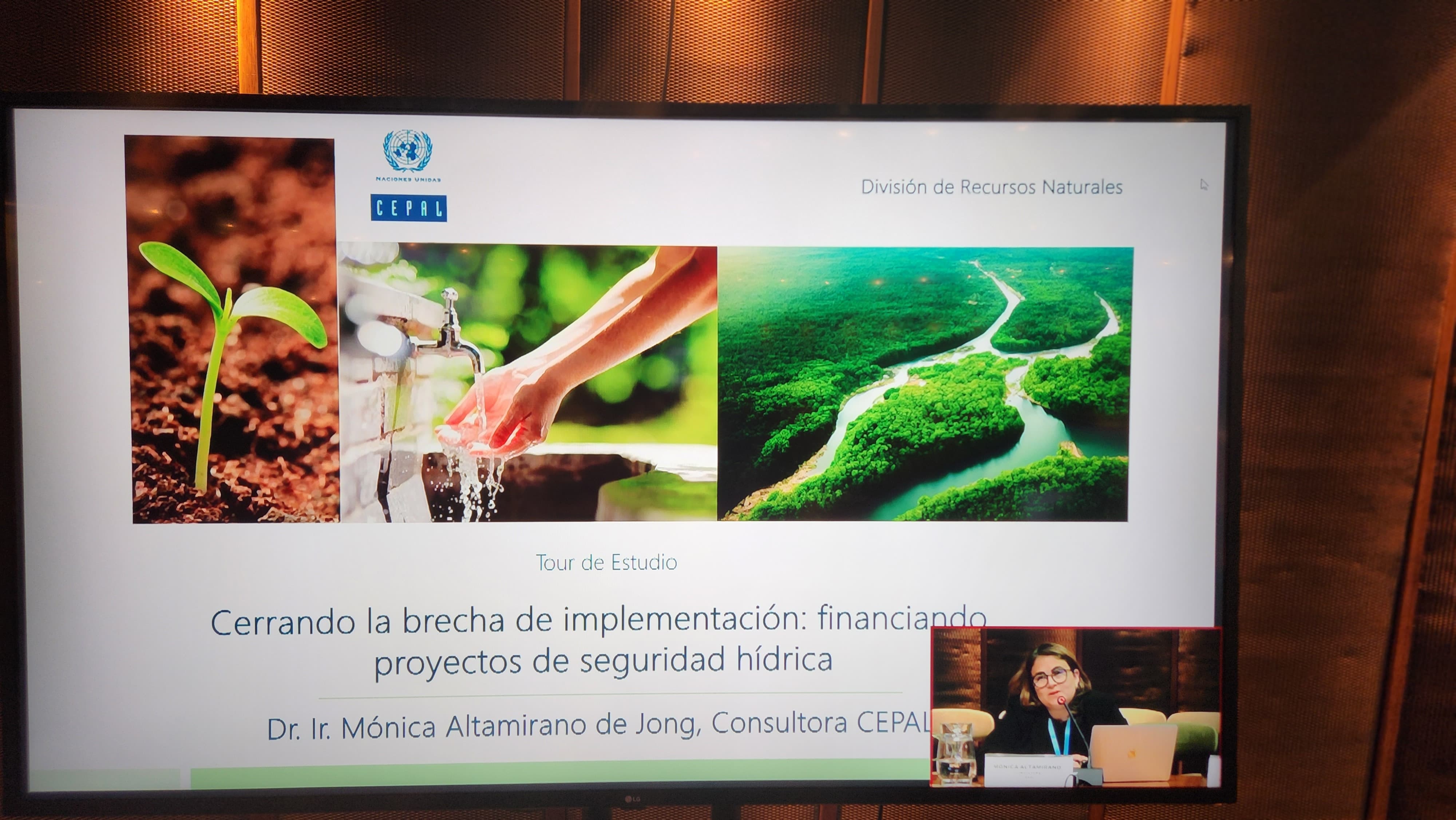
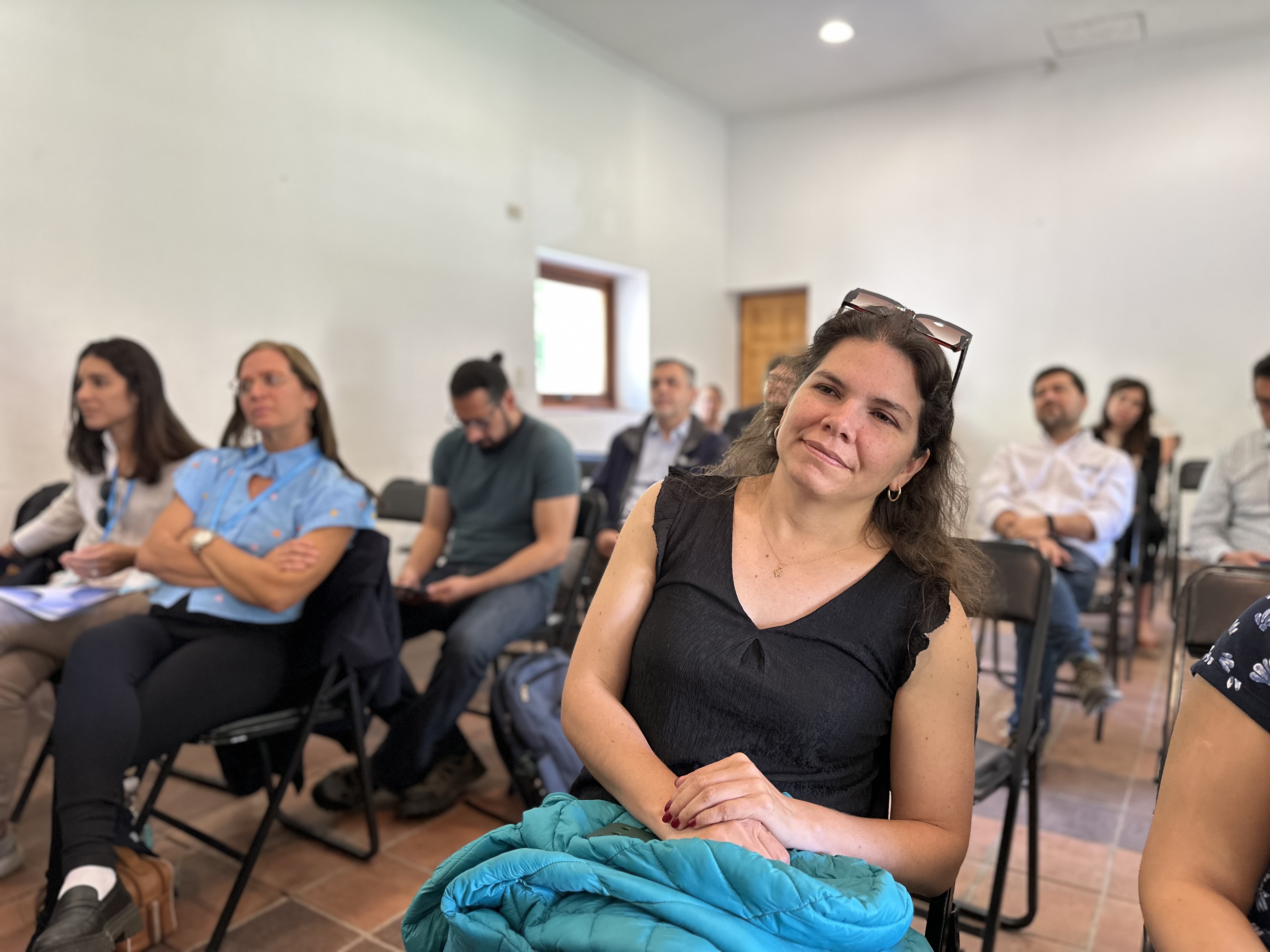
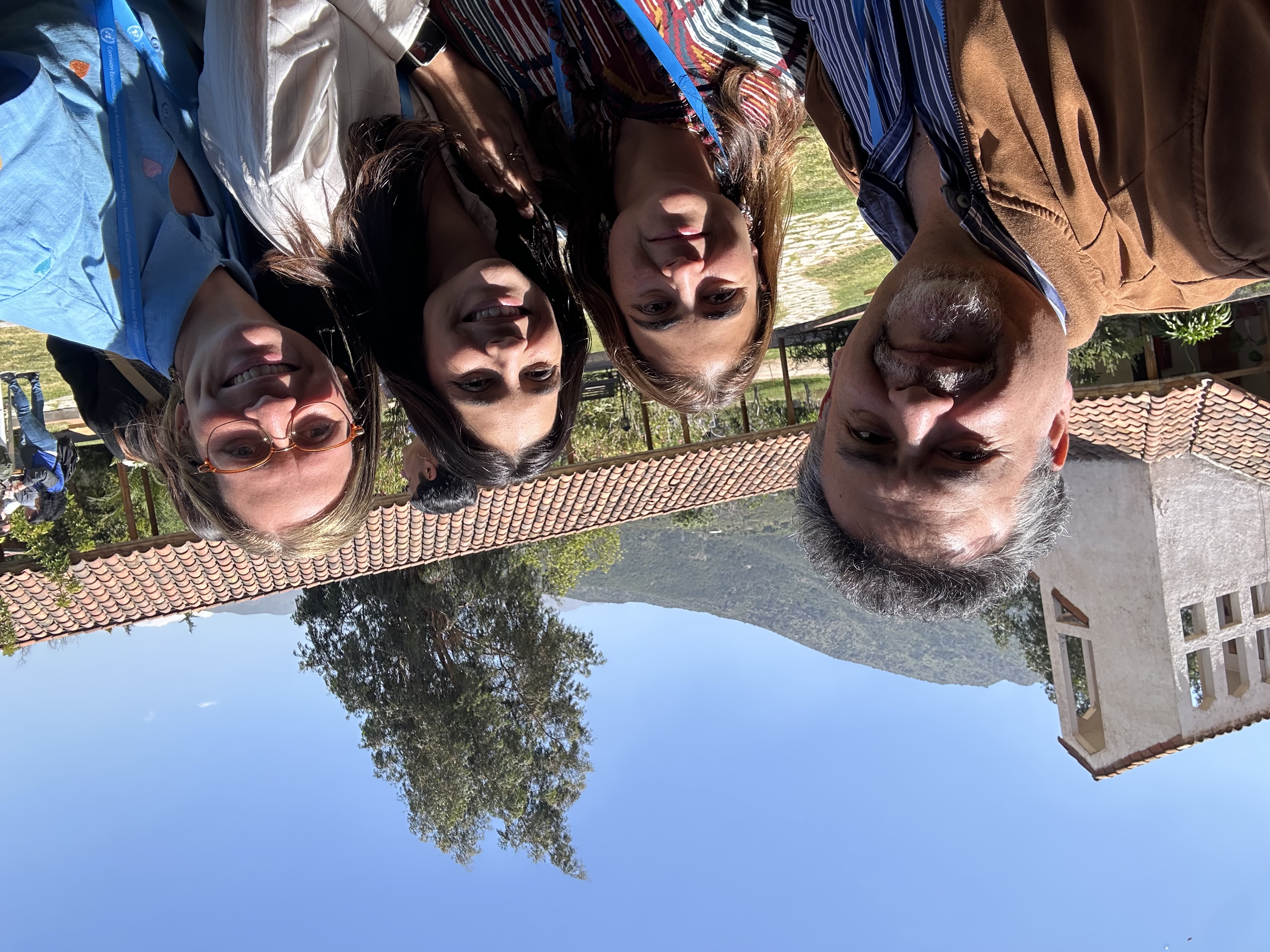
In my own way, I am also engaged in holding open fields of tension—between finance and justice, innovation and equity, pragmatism and idealism. Building bridges in these spaces is difficult because they require the patience to sit with discomfort, the intellectual honesty to acknowledge past failures, and the resilience to advocate for more nuanced, third-way solutions.Below is the speech I had the honor of delivering on November 15th at the Study Tour on Resilient Water Infrastructure, organized by ECLAC ’s Natural Resources team, with participants from 12 countries. Gracias Dr Silvia L. SARAVIA MATUS (PhD MSc BSc Economics) por este oportunidad de compartir mi visión y la historia personal que me motiva a empujarla.
Closing the Implementation Gap: Lessons from Experience and the Path Forward
I began my career calculating the costs of achieving the Millennium Development Goals in education, analyzing statistical data on school expenditures across the country. The findings were shocking, and I felt compelled to visit schools along the Atlantic coast, where operational and maintenance costs were inexplicably low. What I saw was disheartening—costs were low not because of efficiency but because there was no maintenance at all. Schools were being built near roads for visibility, to generate votes, while children continued to take lessons under mango trees. That realization changed my career path for good.
A year later, I became a technical assistant to the Minister of Education under a government that prioritized technically sound appointments over political ones. I observed firsthand how my boss and mentor, who led the social cabinet, negotiated with the World Bank and other donors to shift from a project-based approach to a programmatic one. The focus moved toward place-based strategies for the country's ten priority education policies. Through this experience, I learned three crucial lessons:
- The White Elephant Problem: Infrastructure is not the goal—service provision is. We must focus on ensuring delivery rather than merely building structures.
- Institutional Context Matters: Copy-pasting solutions from other countries without adapting them to the local governance structure leads to inefficiencies and failure.
- Resource Constraints and Trade-offs: Financial and operational constraints are inevitable. Creativity and ingenuity are essential to design mechanisms that balance competing needs and make implementation feasible.
Recognizing these challenges, I chose to pursue further education at TU Delft in a program designed for engineers working at the intersection of policy and infrastructure systems. My Master’s in Systems Engineering and Policy Analysis led to a PhD on innovative contracts in the road sector, analyzing performance-based and public-private partnership (PPP) models across Finland, Spain, and the Netherlands—exploring strategies to mitigate possible opportunistic behavior from private sector in contract execution.
Now, 22 years later, with 16 years dedicated to water security and adaptation, I find myself working in one of the few countries where water is treated as a national security issue. Here, despite the sector being fully publicly financed, tariffs are structured to ensure cost recovery and service continuity. Water security, sanitation, and flood control are essential not just for daily life but for economic resilience, as scarcity -no only flood risk- has become a pressing issue too the last five years.
Persistent Pitfalls in Infrastructure Financing
Working as a specialist in PPPs and water security financing, I have observed public investment systems, procurement practices, and financial arrangements across Asia, Europe, and Latin America and the Caribbean (LAC). It is disheartening to see the same mistakes being repeated across social and environmental sectors. Political interests drive the creation of costly, unsustainable infrastructure projects—white elephants built to earn votes, rather than to provide lasting services. These ad-hoc, politically motivated decisions sabotage long-term sustainability, failing not only present communities but future generations as well.
I believe that as Latin Americans, we have already in place great technical and intellectual capacity. We can and must do better. There are already examples of progress—such as Peru’s Natural Infrastructure for Water Security Program, where politicians have inaugurated watershed conservation projects. These examples prove that political will can be aligned with sustainable and pragmatic investment in water security.
Shifting the Investment Paradigm: Breaking Institutional Silos
For the past three years, I have transitioned through multiple roles to influence the actors shaping upstream investment planning processes— those managing financial resources, developing investment frameworks, and designing procurement systems. These stakeholders hold the “carrots” that can incentivize change, bringing together traditionally siloed communities to collaborate, innovate, and implement more effective financing models.
Today, I share my personal perspective on the remaining challenges—the persistent disconnections between public and private stakeholders—and the emerging opportunities we must seize by overcoming mutual distrust and harnessing collective intelligence.
Where do we stand today?
A recent The World Bank Group study highlights that investment gaps in LAC’s water sector remain substantial. However, it is not just a question of increasing funding—28% of allocated funds are not implemented due to inefficiencies in project preparation and execution.
The consequence? The most vulnerable populations pay the highest price. Those without formal water connections pay disproportionately high costs for alternative sources. Every year of delay in water project delivery translates into mounting environmental and social costs, further widening equity gaps. These costs include preventable deaths, as seen in Santiago 25 years ago—a reality that continues to persist across many capital cities in the region.
Reframing the debate
While debates over private sector participation in water services remain highly polarized, the fact is that full-scale privatization is no longer on the table for most countries. Yet, a de facto privatization is already underway. Major real estate firms and multinational corporations, recognizing water as the “new gold,” are strategically acquiring land to secure control over water resources. Meanwhile, in many cities, people pay for bottled water, water truck deliveries, and even private wells in their homes—directly compensating private actors for services that should be provided publicly.
A common assumption is that lower-income populations cannot or do not want to pay for water services. However, decades of experience from organizations such as Water.org show that this is a myth. Given the opportunity, low-income households actively seek financing solutions to access water and sanitation services—because doing so restores dignity, improves household economies, and enhances overall well-being.
Identifying leverage points and driving systems change
To tackle these challenges, we must address two core gaps:
- The Gap Between Political Decision-Makers and Technical Experts: Politicians, eager to deliver visible infrastructure projects within their electoral cycles, push poorly prepared projects onto development banks and donors. Technical experts, while proficient in hydrology, sanitation, and engineering, often lack training in strategic asset management, infrastructure finance, and institutional structuring. As a result, implementation and financial sustainability considerations are often an afterthought, instead of being integral to project design from the outset.
- The Gap Between Investment Needs and existing Financial Mechanisms: Many existing financing structures fail to align investment incentives with long-term service delivery goals. Innovative contractual and financial instruments—such as performance-based contracts, impact investing, and blended finance models—must be leveraged to close the gap.
We can support policymakers, financial institutions, and technical experts in bridging these gaps by providing them tools to:
- Develop investment cases that attract impact investment and climate finance.
- Design performance-based contracts that ensure efficiency and accountability.
- Apply system analysis approaches to create financing structures that sustain long-term water security.
- Foster cross-sector collaboration to break down institutional silos and drive collective action.
Moving from Debate to Action: engineering of incentives
We need to move past the political debate to the how—outlining concrete incentive structures , financing mechanisms, and best practices in investment planning. We must explore new models such as impact bonds, blended finance structures, and circular economy business models, alongside case studies that demonstrate successful public-private collaboration in water security projects and those that failed and showed the way about what not to do in such a process.
It is time to move beyond debate and implement solutions that close the implementation gap—ensuring water security for all.
If we are to achieve universal access to water and sanitation while ensuring long-term resilience, we must move beyond ideological battles and towards practical, scalable solutions. This is my call to action: to engineer through incentives the financial, institutional, and technical pathways that will secure water for present and future generations.
By aligning incentives, leveraging financial innovation, and unlocking collective intelligence and action, we can ensure that the next generation does not inherit the same unresolved challenges.
.jpeg)